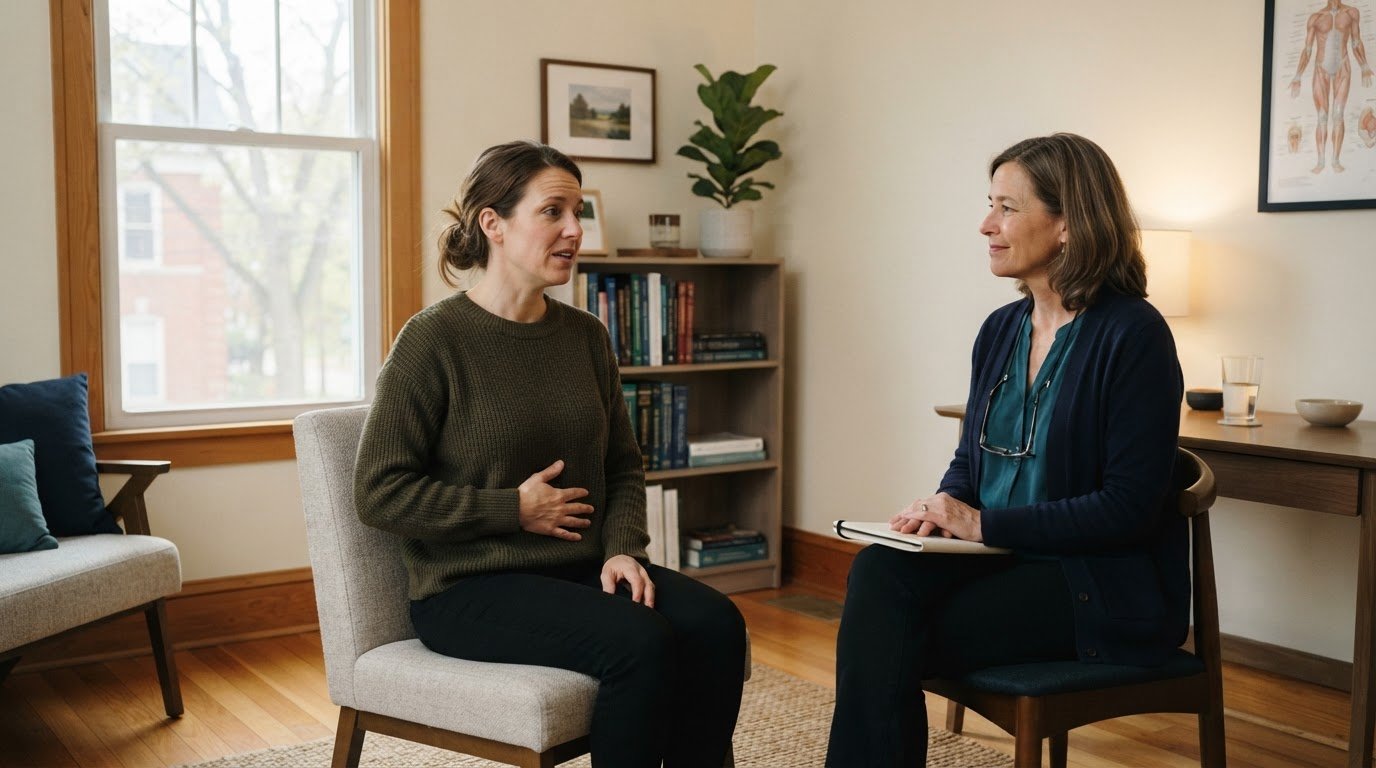

After a stressful day, you may notice tense shoulders and breathing that feels rushed. Slow belly breathing may support relaxation and vagal activity, making it a gentle practice to explore if you’re wondering how to improve vagus nerve function.
It’s understandable to look for signs that your body is responding. Feeling calmer can be encouraging, but it doesn’t confirm vagus nerve activation. Paying attention to how you feel can help you notice which practices support relaxation.
This article explains how the vagus nerve relates to the body’s calming response, how to practice slow breathing comfortably, and which changes may suggest that you’re relaxing. It also explains why these signs can’t confirm nerve activation on their own.
Vagus Nerve Role in the Parasympathetic Nervous System
The vagus nerve is cranial nerve X, the 10th of the 12 cranial nerves. It runs from the brain stem toward the gut and carries signals in both directions. Its two branches carry a large share of parasympathetic signals, supporting functions such as digestion and recovery.
The sympathetic nervous system prepares the body for action, increasing alertness during stress. The parasympathetic system helps shift toward rest; the vagus nerve is a key pathway in that response. The left and right vagal nerves contain 75% of the parasympathetic nervous system’s nerve fibers.
This connection helps explain why heart rate and breathing can change as you relax. The vagus nerve helps regulate heart rate, breathing, digestion, blood pressure, and speech. During slow breathing or meditation, an easier exhale may accompany a calmer feeling, but that sensation alone cannot confirm nerve activation.
Exercise matters too. A relaxed walk can support overall nervous system health, while intense activity naturally calls for greater alertness. Heart rate variability is one measure related to vagal tone, but it isn’t a simple at-home test for nerve activation. Everyday breathing and meditation are also different from device-based vagus nerve stimulation. These body systems work together rather than switching on and off like a button.
A broader approach to nervous system health can include physical activity and a healthy diet. Managing conditions such as diabetes and high or low blood pressure is also part of this approach. Practices such as meditation, hypnotherapy or yoga are included as well. Together, these options cover movement, food, care of ongoing conditions, and practices that can help keep the nervous system healthy. They are lifestyle measures, rather than a way to confirm that the vagus nerve has been activated. The measures span everyday habits and management of health conditions, as well as a range of practices that may be part of an overall approach to nervous system health.
Slow, Deep Belly Breathing
Slow diaphragmatic breathing gives the body a steady rhythm to follow. A gentle, longer exhale may support relaxation and vagal activity. If you’re exploring how to improve vagus nerve function, this simple, non-invasive practice is one place to start, though feeling calmer doesn’t prove nerve activation.
Diaphragmatic Breathing
Diaphragmatic breathing is slow breathing led by the diaphragm. Your abdomen gently rises as you inhale. Sit or lie comfortably, place a hand over your belly, and let your chest stay relatively still. Breathe without straining, aiming for a smooth rhythm rather than an unusually deep breath. This deliberate practice can offer a pause during everyday stress.
Breathing Exercises for Relaxation
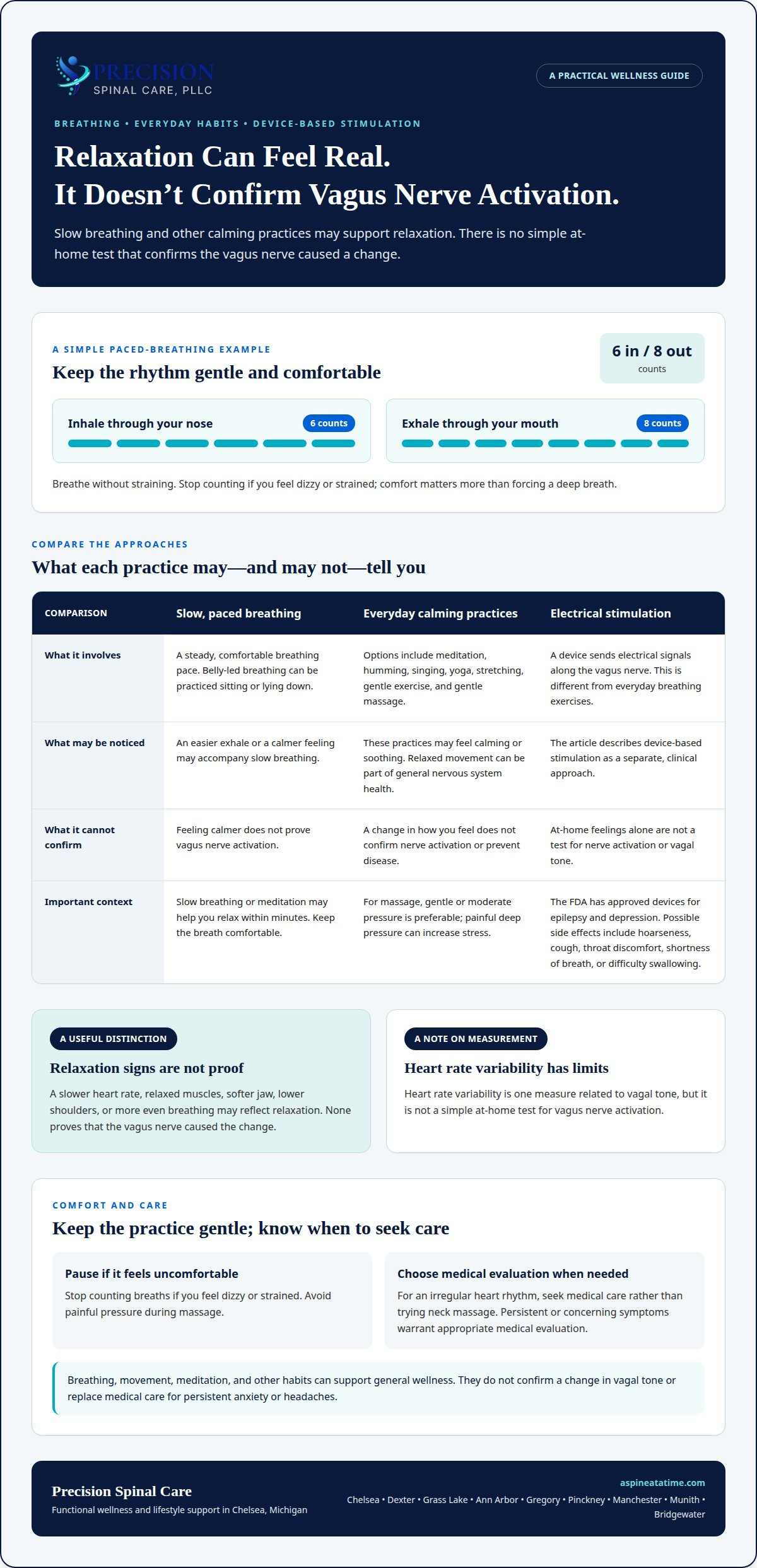
Breathing exercises use a chosen pace to focus attention and encourage relaxation. Try inhaling through your nose for a count of six, then exhaling through your mouth for a count of eight. Keep each breath comfortable, and stop counting if you feel dizzy or strained. Slow breathing or meditation may help you relax within minutes, making it an option when anxiety or tension rises.
Electrical vagus nerve stimulation uses a device, unlike paced breathing. Breathing exercises may support relaxation, but they don’t replace medical care for persistent anxiety or headaches.
Notice whether your jaw softens, your shoulders lower, or your breathing becomes more even. These changes can reflect relaxation, but they don’t confirm nerve activation. If you’re considering how to improve vagus nerve function, comfort and consistency matter more than forcing a deep breath.
How Can You Tell if Your Vagus Nerve Is Being Activated?
There’s no simple at-home test that confirms vagus nerve activation. A slower heart rate or relaxed muscles may reflect relaxation, but neither proves the nerve caused the change.
Humming, singing, meditation, gratitude, and gentle exercise can encourage calm and support nervous system health. Gentle massage may feel soothing, while painful pressure can increase stress. Eye movements are sometimes suggested, but their effectiveness needs to be demonstrated. These practices may affect how you feel, but they don’t confirm nerve activation or prevent disease.
Electrical vagus nerve stimulation uses a device to send signals along the nerve. The FDA has approved devices for epilepsy and depression. Implanted stimulation may be considered for some patients whose epilepsy remains uncontrolled with medication. Costs vary depending on the device, procedure, and follow-up care. Possible side effects include a hoarse voice, cough, throat discomfort, shortness of breath, or difficulty swallowing.
Supportive habits include regular physical activity within your abilities, meditation, and a balanced whole-food diet. They support general health but don’t prove a change in vagal tone. Probiotic foods or supplements may support gut health, but they aren’t established here as ways to increase vagal tone. Slow breathing, discussed above, is another practical relaxation exercise.
Wellness recommendations also include cold-water immersion, along with eye movements, meditation, massage, singing, or humming. Any benefit may come from relaxation. Yoga, stretching, and other slow, relaxed movement are gentle ways to exercise and restore balance.
For massage, gentle or moderate pressure is preferable: painful deep-tissue massage can trigger the fight-or-flight response. Professional mobile wellness services like The Outcall Spa emphasize soothing, restorative treatments in a comfortable setting to encourage a restful state. If you have an irregular heart rhythm, seek medical care rather than trying neck massage to affect it. Singing, playing music, humming, or chanting can also help calm the mind and body.
Precision Spinal Care: Functional Wellness and Lifestyle Support
Precision Spinal Care offers functional wellness and lifestyle support for people looking to build healthier routines. This approach can connect daily habits with broader wellness goals, including nervous system support, without suggesting that any one practice directly activates the vagus nerve. People in Chelsea, Dexter, Grass Lake, Ann Arbor, Gregory, Pinckney, Manchester, Munith, and Bridgewater can explore options suited to their wellness priorities.
Upper cervical chiropractic care uses gentle, non-invasive spinal alignment without twisting, popping, or cracking. Dr. Lisa Olszewski provides this specialized care in the Chelsea area. This care may suit someone interested in how posture and upper cervical alignment relate to whole-body wellness. It is distinct from breathing exercises and medical vagus nerve stimulation, and it cannot confirm vagal activation.
Nutritional Consultations offer a chance to discuss food choices and nutrition goals as part of a broader wellness plan. Parasite Cleansing Programs are another wellness option. These services address different aspects of wellness rather than directly stimulating the vagus nerve. Persistent or concerning symptoms warrant appropriate medical evaluation.
This kind of support may suit people who want to consider lifestyle, nutrition, and gentle spinal care together. A conversation can help clarify which wellness options align with your goals. Contact Precision Spinal Care to learn more, without pressure to choose a particular service.
Frequently Asked Questions
What are the signs of vagus nerve problems?
There isn’t one pattern of symptoms that identifies a vagus nerve problem. One possible effect of vagus nerve damage is gastroparesis, which slows stomach emptying. Diabetes, viral infections, abdominal surgery, and scleroderma can be associated with this damage. Digestive symptoms alone don’t establish the cause, so persistent changes need medical evaluation rather than self-diagnosis.
What is the role of the parasympathetic nervous system?
The parasympathetic nervous system supports routine maintenance and recovery processes in the body. Its activity is part of a broader regulatory system, not a measure of whether someone feels emotionally calm. For example, feeling worried doesn’t mean the parasympathetic system has stopped working. The body’s responses are complex, so one feeling can’t show how this system is functioning.
What is vagal tone?
Vagal tone describes the influence of vagus nerve signaling on the body’s regulation. Heart rate variability can provide one measure related to vagal tone, but it isn’t a direct test of nerve health. A relaxed feeling or a single measurement can’t establish whether vagal tone is high or low, or explain what may be affecting it.
What does the vagus nerve do and what does “vagus nerve function” mean?
Vagus nerve function refers to the nerve’s signaling activity and its role in coordinating processes in the body. It’s a broad term, not a feeling you can assess by noticing one change, such as a moment of calm. A concern involving one body function doesn’t, by itself, show that the vagus nerve is the cause.
Do slow breathing exercises improve vagal tone, and how should they be done?
Slow breathing may encourage relaxation, but feeling calmer doesn’t demonstrate a measurable change in vagal tone. Keep the pace comfortable, and avoid forcing unusually deep breaths or holding them. For example, pause to breathe gently during a stressful moment and focus on the present. Stop if the practice makes you feel unwell.
Disclaimer
This article is for educational purposes only and is not intended to diagnose, treat, cure, or prevent any disease or medical condition. Upper cervical chiropractic care, including NUCCA-based care, focuses on the relationship between the upper spine, nervous system, posture, and overall body function. Individual results may vary, and not every condition or symptom is appropriate for chiropractic care alone. Always consult with a qualified healthcare provider regarding any health concerns, new or worsening symptoms, or before starting any new treatment plan. If you are experiencing a medical emergency, severe pain, sudden neurological symptoms, or other urgent health concerns, seek immediate medical attention.