

A different approach doesn’t have to mean a forceful one. If headaches, dizziness, or neck tension are disrupting daily life, a nervous system regulation chiropractor in Ann Arbor, MI may assess how the upper cervical spine relates to your concerns and use gentle, precise care rather than twisting, popping, or cracking. Knowing what the approach involves can help you decide whether it suits your needs.
It’s reasonable to want to know what an assessment involves and how care is tailored. This article explains how nervous system-focused chiropractic differs from traditional care, what an evaluation may consider, and how personalized care fits into a broader wellness plan. Precision Spinal Care in Chelsea serves people from Ann Arbor, Dexter, Grass Lake, Gregory, Pinckney, Manchester, Munith, and Bridgewater who want to learn about gentle upper cervical care.
What Can Affect Nervous System Regulation?
Stress, posture, sleep, movement, and food choices all shape how the body responds to daily demands. Long hours at a desk or disrupted sleep can add to physical strain.
Stress Responses and Nervous System Activity
During stress, the sympathetic nervous system can raise heart rate, tighten muscles, and release adrenaline and cortisol. This response helps the body meet immediate demands, but repeated activation can make it harder to relax. Notice whether symptoms follow a difficult meeting, traffic, or late-night screen use. These patterns can help you see how daily stress relates to physical tension.
Chronic Stress and Physical Discomfort
Chronic stress may contribute to muscle tension, headaches, neck or back discomfort, disrupted sleep, and changes in immune function. Rounded posture at a laptop, skipped meals, little movement, and short sleep can add strain. For addressing persistent physical strain, specialized recovery clinics such as Re-Activ Lugano demonstrate how advanced physiotherapy and targeted therapeutic methods can help relieve chronic musculoskeletal tension. Consider these habits together rather than focusing on one symptom alone.
Build in practical pauses: take a brief walk, breathe slowly, or keep a steady bedtime routine. For addressing ongoing emotional and mental stressors, working with professional therapy practices such as Mindbender Counseling can help support overall well-being. During cold and flu season, combine stress management with adequate sleep, regular physical activity, balanced nutrition, recommended vaccinations, and good hygiene. Posture correction and nervous system support can also consider how alignment and daily strain relate to comfort and movement.
How Upper Cervical Alignment Relates to the Nervous System
Look for an assessment that considers spinal alignment, movement, and your concerns. Ask what techniques are used, how progress is reviewed, and how your plan reflects your needs.
Differences in Chiropractic Approach
Traditional chiropractic care commonly evaluates the spine, joints, and muscles, with attention to mobility and musculoskeletal discomfort. A nervous system-focused approach also considers how spinal alignment relates to nerve pathways and function. The spine protects the spinal cord and provides routes for spinal nerves. Neither approach should be assumed to change emotional health, immune function, or recovery outcomes. The focus stays on spinal function and the person’s stated goals.
Ann Arbor Provider Comparison Criteria
Compare the assessment, explanation, and technique, not just the label. Ask whether the provider evaluates upper cervical alignment and explains how it relates to your concern. A careful explanation should distinguish an alignment finding from a proven cause of symptoms. It should also clarify whether care uses gentle, precise contact or broader spinal techniques.
The spine supports movement and provides pathways for nerve communication, but an alignment finding alone doesn’t explain why headaches, dizziness, or other symptoms occur. A useful comparison separates what is assessed from what is hoped for. Ask how findings shape the plan and how changes in movement or discomfort are tracked.
How NUCCA Care May Support Nervous System Regulation
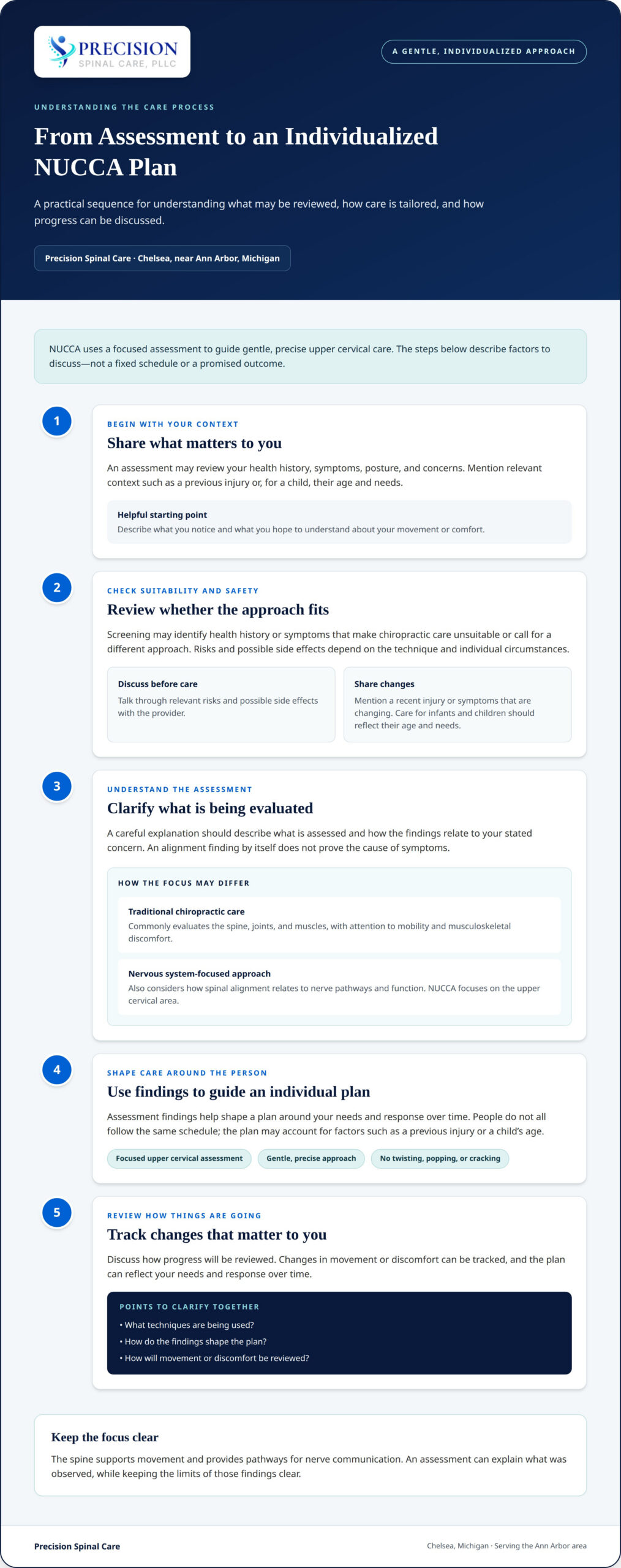
NUCCA care uses a focused assessment to guide gentle, individualized spinal care. It may suit people seeking a precise approach, including some infants and children.
Individual Assessment and Care Planning
An assessment may review health history, symptoms, posture, and upper cervical alignment. Findings help shape a care plan around your needs and response over time. For example, the plan may account for a previous injury or a child’s age. Ask how the assessment informs care and how progress is reviewed, rather than assuming everyone follows the same schedule.
Screening, Risks, and Care Fit
Screening can identify health history or symptoms that may make chiropractic care unsuitable or call for a different approach. Risks and possible side effects depend on the technique and individual circumstances. Discuss these factors before care, especially after an injury or if symptoms are changing. Care for infants and children should be adapted to their age and needs.
Research has explored possible links between spinal manipulation, immune-related markers, and inflammatory activity. That research alone does not establish that adjustments improve immune function or help recovery from illness.
Michigan insurance coverage depends on your plan and the service. Look for a chiropractor with an active Michigan license, and ask about NUCCA training and pediatric experience. In Ann Arbor, look for providers who assess upper cervical alignment and explain their approach. This article does not identify individual practitioners.
Nervous System Support at Precision Spinal Care Near Ann Arbor
Precision Spinal Care offers posture correction and nervous system support through a personalized approach in Chelsea, near Ann Arbor. Dr. Lisa Olszewski is the only chiropractor in Chelsea offering NUCCA. The focus is on the relationship between posture, spinal alignment, and daily function, without promising a particular outcome. This may be relevant if desk work, recurring tension, or movement concerns affect your comfort.
NUCCA Upper Cervical Chiropractic Care uses a gentle, precise approach to upper cervical alignment. Assessment findings guide whether this approach fits your needs. It is non-invasive and does not involve twisting, popping, or cracking. For people from Ann Arbor and surrounding communities, including Chelsea, it’s an option to discuss when exploring nervous system-focused care.
Whole-body wellness can also involve habits beyond spinal care. Nutritional consultations can support conversations about food choices and personal wellness goals. Parasite cleansing is a separate service, not a proven method for regulating nervous system function. Each option has a distinct purpose, so care should reflect the concern being addressed.
If posture or nervous system wellness is a concern, learning how an assessment and care plan work can help clarify your next step. Contact Precision Spinal Care in Chelsea to discuss whether its NUCCA and wellness services fit your goals.
Frequently Asked Questions
How Is It Different From Traditional Chiropractic?
The practical difference lies in the focus and technique. NUCCA centers on the upper neck, while traditional chiropractic may address other spinal or joint areas. A nervous system regulation chiropractor in Ann Arbor, MI should explain the intended focus and what a visit involves before care begins. This helps you decide whether the approach matches your preferences and wellness goals.
How Many Visits Will I Need?
There’s no standard number of visits for every patient. The plan depends on your goals and how your needs change during care. Before starting, clarify what progress means to you, such as greater comfort during a usual activity. You can also discuss when the plan will be reviewed and what changes might prompt an adjustment.
What Is Nervous System Regulation Chiropractic Care?
It’s a chiropractic approach that uses spinal care with the aim of supporting nervous system function. The phrase describes a care focus, not a separate medical diagnosis or a promise that body functions will change. Someone interested in gentle upper cervical care may consider it as part of a broader wellness plan.
How Do Chiropractors Assess Nervous System Function?
Chiropractors may use an assessment of your history and physical function to guide care. No single finding proves how well the entire nervous system is working. Ask what each assessment can show and what it cannot establish. That distinction helps keep goals realistic and prevents confusing a spinal observation with a medical diagnosis.
What Evidence Supports Chiropractic Care for Nervous System Regulation?
Evidence depends on the specific technique and outcome being studied. Research into biological markers does not, on its own, show that patients will experience a particular change in daily health. A chiropractor focused on nervous system regulation near Ann Arbor, MI should describe the limits of evidence clearly and avoid presenting a theory or early research finding as proof of a clinical result.
Disclaimer
This article is for educational purposes only and is not intended to diagnose, treat, cure, or prevent any disease or medical condition. Upper cervical chiropractic care, including NUCCA-based care, focuses on the relationship between the upper spine, nervous system, posture, and overall body function. Individual results may vary, and not every condition or symptom is appropriate for chiropractic care alone. Always consult with a qualified healthcare provider regarding any health concerns, new or worsening symptoms, or before starting any new treatment plan. If you are experiencing a medical emergency, severe pain, sudden neurological symptoms, or other urgent health concerns, seek immediate medical attention.