

Your body already has systems for processing and removing waste, so a cleanse is not the same as supporting those systems. A thoughtful approach supports normal processes rather than promising a rapid cleanse. The methods matter as much as the label.
It’s understandable to want a clear plan when concerns about heavy metals or environmental toxins feel difficult to sort through. The liver filters blood as part of the body’s natural detoxification process. This article explains what detoxes and cleanses mean, how the body works on its own, and what to consider when evaluating a program.
You’ll also learn how a clinic in Chelsea, Michigan, approaches heavy metals and environmental toxins, and why reducing exposure and getting personalized support differ from quick-fix cleanse claims.
Why People Consider a Toxin Relief Program
People explore detox plans because of concerns about symptoms, diet, weight, or possible exposure. Methods vary, so understanding what a plan involves can help you make a more informed choice.
The Body’s Natural Detoxification Processes
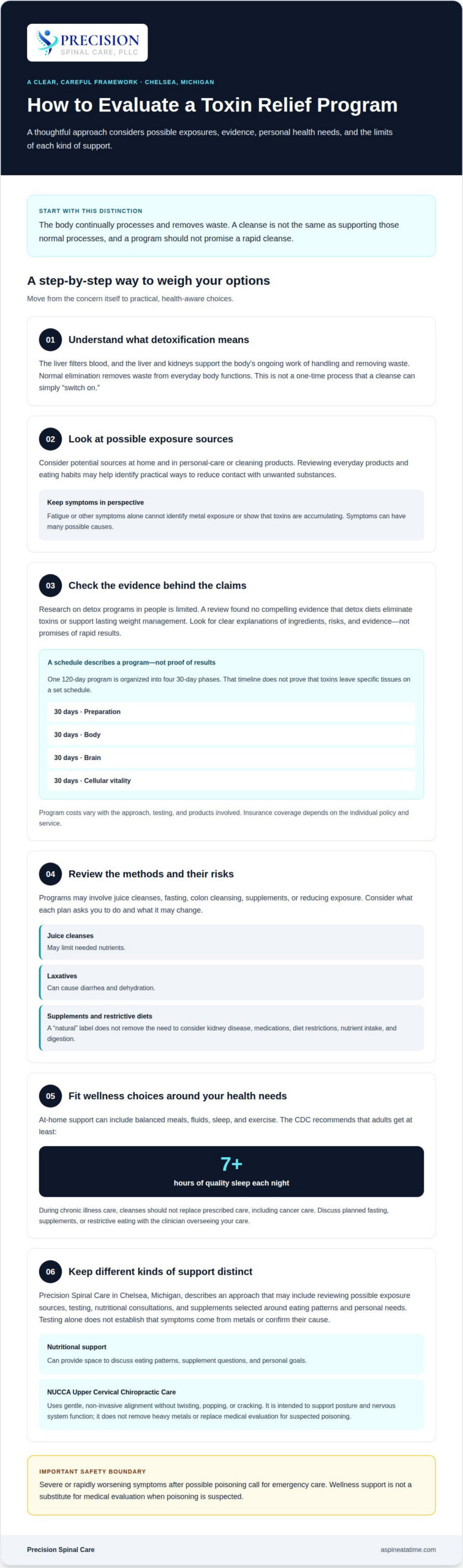
Detoxification is the body’s ongoing processing and removal of waste. The liver filters blood, while normal elimination removes waste from everyday body functions. Symptoms alone can’t show that toxins are accumulating. The Centers for Disease Control and Prevention recommends adults get at least seven hours of quality sleep each night.
Types of Detoxification and Cleansing Programs
Programs may involve juice cleanses, fasting, colon cleansing, supplements, or reducing exposure. Research on detox programs in people is limited, and a review found no compelling evidence that detox diets eliminate toxins or support lasting weight management. Insurance coverage depends on the individual policy and service. Program costs vary with the approach, testing, and products involved.
At-Home Detoxification Support
At-home support can include balanced meals, fluids, sleep, and exercise. Juice cleanses may limit needed nutrients, while laxatives can cause diarrhea and dehydration. Evaluate a program by whether it clearly explains its ingredients, risks, and evidence, not by promises of rapid results. Severe or rapidly worsening symptoms after possible poisoning call for emergency care.
Detoxification During Chronic Illness Care
During care for a chronic illness, cleanses should not replace prescribed care, including cancer care. Fasting, supplements, or restrictive eating can affect nutrition and digestion, so discuss planned changes with the clinician overseeing your care. People may consider detoxification because of exposure concerns, persistent symptoms, or wellness goals. The right approach depends on health history and the specific methods involved.
What Detoxification Means and How It Relates to the Nervous System
Detoxification is the body’s ongoing process of handling and removing waste, not a single cleanse that scrubs every chemical from tissues. The liver and kidneys support this work, while food provides nutrients needed for normal body functions. This distinction helps separate everyday detoxification from claims about quick cleanses.
The nervous system coordinates signals between the brain and body, while the upper cervical spine supports the head and lies near the brainstem. This anatomical relationship matters for posture, movement, and sensory signaling, but it does not show that spinal alignment removes toxins or speeds detoxification. Nervous system support and chemical elimination are related wellness topics, but they are not interchangeable processes.
Dietary regimens may emphasize whole foods, restrict calories, or add mineral and nutrient supplements. A supplement labeled “natural” still deserves careful consideration, especially if you have kidney disease, take medications, or follow a restrictive diet. Such diets can change nutrient intake and may affect gut bacteria. Stress, existing health needs, and the purpose of a supplement all matter when considering a cleansing plan.
One 120-day detox program is divided into four 30-day phases: preparation, body, brain, and cellular vitality. This schedule describes the program’s structure, not proof that toxins leave specific tissues on a set timeline. For questions about nutrition and nervous system support, discussing wellness support can help clarify how these approaches fit together.
The Clinic’s Heavy Metal and Environmental Toxin Approach
The clinic’s approach addresses environmental toxins, heavy metals, and mycotoxins. The plan considers possible exposure sources at home and in personal-care or cleaning products. Reviewing everyday products and eating habits can help identify practical ways to reduce contact with unwanted substances. Fatigue or other symptoms alone cannot identify metal exposure.
Testing and other approaches may be considered as part of a clinic’s approach, but they do not by themselves establish that symptoms come from metals or confirm their cause. These steps describe the clinic’s approach; they do not establish that symptoms come from metals or confirm their cause.
Support may also include nutritional consultations and supplements selected around eating patterns and personal needs. The focus is practical exposure reduction and wellness support, not a promise to remove every substance or explain fatigue. Symptoms can have many possible causes.
NUCCA Upper Cervical Chiropractic Care uses gentle, non-invasive alignment without twisting, popping, or cracking. It supports posture and nervous system function, but doesn’t remove heavy metals or replace medical evaluation for suspected poisoning. To discuss how these distinct forms of support relate to your goals, contact the clinic about your wellness goals.
Program includes a personalized plan for toxins in the home and personal-care and cleaning products. Rice bran fiber may be included as part of nutritional support. The program does not establish that any specific amount of accumulated toxins is eliminated in the first 7 days.
Toxin Relief and Detox Support at Precision Spinal Care
Precision Spinal Care offers Toxin Relief and Detox Support for people seeking guidance on environmental exposures and wellness. Nutritional Consultations can explore eating patterns, supplement questions, and personal goals. This gives patients a chance to discuss their concerns in context, rather than assuming fatigue or another symptom points to a specific toxin.
The conversation can cover possible exposure sources, such as household products or personal-care items, alongside everyday habits. The focus is practical support and thoughtful choices, not a promise to remove every substance from the body. If you are concerned about heavy metals, remember the limits of wellness support: suspected poisoning requires medical evaluation.
NUCCA Upper Cervical Chiropractic Care is a separate part of the clinic’s whole-person approach. This gentle, precise technique is intended to support posture and nervous system function. It does not remove heavy metals or replace care for poisoning. Keeping these distinctions clear allows nervous system and wellness goals to be discussed together without confusing their purposes.
Parasite Cleansing Programs address a different concern and should not be confused with heavy metal support. A conversation can help clarify which service relates to your goals and whether nutritional guidance or gentle spinal care is relevant. No single service fits every concern, and symptoms alone do not establish their cause. Contact Precision Spinal Care in Chelsea, Michigan, to discuss your wellness goals.
Choose a Thoughtful Next Step for Your Wellness
A thoughtful toxin relief program should start with your goals, health history, and concerns about possible exposures, not a one-size-fits-all promise. The next step is a conversation to understand which support may fit your needs and when additional medical guidance may be important.
Precision Spinal Care offers Nutritional Consultations, Parasite Cleansing Programs, and NUCCA Upper Cervical Chiropractic Care as part of its broader wellness services. These approaches have distinct purposes, and NUCCA care supports nervous system function rather than removing toxins. In Chelsea, Michigan, a personalized discussion can help you consider the right direction without pressure to pursue a particular service.
If you’re ready to talk through your wellness goals and questions, contact Precision Spinal Care. A clear, informed next step can help you move forward with confidence.
Frequently Asked Questions
How does it work?
A clinic-based approach starts by clarifying your concern and reviewing possible exposure history. Support may then focus on reducing contact with likely sources and considering nutrition or supplements. If testing is part of the plan, results need context because a finding alone may not explain every symptom. The goal is a clear, personalized approach, not a promise of rapid elimination.
Neurotoxins: Where Do They Come From?
Neurotoxins are substances that can interfere with nervous system function. Possible sources include certain metals, pesticides, and industrial chemicals. The type of substance and amount of exposure matter. For example, a specific concern about a workplace or household source is more useful to assess than assuming fatigue alone proves exposure.
What about safety?
Safety depends on the method, your health history, and the products used. Restrictive fasting, laxatives, or supplements can pose risks, and supplements may interact with medicines. Keep prescribed care unchanged unless the clinician overseeing it advises otherwise, and discuss a planned cleanse with them, especially during care for a chronic illness. Suspected acute poisoning calls for emergency care, not a cleanse.
What is the best way to detox your body?
No single cleanse is right for everyone. For everyday support, choose regular balanced meals, adequate fluids, and consistent movement instead of fasting or laxatives. If you suspect an exposure, reducing contact with its likely source is more useful than adding products that promise to remove toxins. A clinician can assess symptoms and consider whether exposure-specific testing is appropriate.
What does “toxin relief program” mean?
A toxin relief program is a wellness plan intended to support normal body processes and address concerns about selected environmental substances. The phrase does not describe one standard protocol. Precision Spinal Care offers Toxin Relief and Detox Support in Chelsea, Michigan, serving nearby Dexter, Grass Lake, Ann Arbor, Gregory, Pinckney, Manchester, Munith, and Bridgewater. Goals and methods depend on the concern.
Disclaimer
This article is for educational purposes only and is not intended to diagnose, treat, cure, or prevent any disease or medical condition. Upper cervical chiropractic care, including NUCCA-based care, focuses on the relationship between the upper spine, nervous system, posture, and overall body function. Individual results may vary, and not every condition or symptom is appropriate for chiropractic care alone. Always consult with a qualified healthcare provider regarding any health concerns, new or worsening symptoms, or before starting any new treatment plan. If you are experiencing a medical emergency, severe pain, sudden neurological symptoms, or other urgent health concerns, seek immediate medical attention.