
Recurring neck tension, headaches, or balance changes can make everyday activities harder. If you’re wondering whether your upper neck may play a role, understanding how atlas misalignment affects health starts with considering symptoms in context, since they can have many causes.
An alignment finding alone can’t explain every symptom, but an assessment can explore possible connections among the neck, movement, and posture. This article explains the atlas’s role, factors that may affect its alignment, and how postural patterns are assessed.
Upper cervical chiropractic assessment
An assessment begins with your symptom history: when concerns started, what affects them, and how they influence daily movement. A clinician may observe posture, neck motion, and balance, and consider whether imaging is useful. X-rays or advanced digital imaging may help assess upper-neck alignment. These findings are considered alongside other possible explanations for symptoms.
Understanding how atlas misalignment affects health means looking beyond a single symptom or alignment finding. Headaches, dizziness, and muscle tension can have different causes, so an examination considers the full picture. Current evidence does not establish atlas alignment as a cause of overall health problems or explain every person’s symptoms.
Chiropractic approaches include precise upper cervical adjustments. Atlas Orthogonal uses a specialized instrument to apply light, controlled pressure. Atlas-specific adjustments aim to address alignment without twisting, popping, or cracking. The approach depends on the assessment, and results can’t be assumed to be the same for everyone.
Temporary soreness or discomfort may follow neck manipulation. Discuss your health history, concerns, and alternatives before an adjustment. This conversation can help clarify the approach and whether it fits your situation.
Sudden, severe neurological symptoms, such as new weakness, trouble speaking, or loss of coordination, require urgent medical care. Neck pain after a serious injury also needs prompt medical attention. These signs call for medical assessment, not an alignment-focused appointment. A careful evaluation can consider whether upper-neck factors may contribute while keeping other explanations in view.
Imaging may include X-rays or advanced digital imaging to assess atlas and axis alignment. Since muscle tension and balance issues can have many causes, an evaluation can help assess whether the upper cervical spine may contribute.
CBCT can support a correction measured within 0.25 degrees of accuracy, while a temperature difference of 0.5 degrees Celsius between sides can indicate nervous-system stress. Atlas-specific adjustments are described as gentle and precise, restoring alignment without twisting or cracking.
What Can Cause Atlas Misalignment?
The atlas, also called C1, is the first vertebra in the cervical spine. It sits beneath the skull and connects with the axis, the second vertebra. This small bone weighs about 2 ounces, yet it supports the head and helps it turn. Its position contributes to how the neck shares movement and weight during everyday activities.
The atlas works with nearby joints and muscles. A precise, balanced position supports coordinated movement between the head and neck. If alignment changes, surrounding tissues may respond with tension or altered movement. That doesn’t prove the atlas causes a symptom; it explains why clinicians consider the whole cervical region.
Several types of strain may contribute to a change in atlas position. Sports injuries, car accidents, falls, and other trauma can place force on the upper neck. Repetitive movements or work-related stress may add strain over time. For example, repeatedly turning your head at work can load neck tissues unevenly. Poor posture over time may also create uneven forces on the vertebrae and cervical support structures.
These factors may affect how the neck maintains balance, but they don’t establish one cause for every person. The type of force, repeated strain, posture habits, and resulting movement patterns all matter. A past fall may be relevant, as may prolonged work positions or recurring sports movements. Considering these details helps explain why upper-neck alignment is assessed alongside posture and function, not in isolation.
Car accidents at 5 miles per hour can cause upper-neck misalignment; looking down at a phone can place 50 to 60 pounds of extra pressure on the spine; typical birth force can be 2,000 pounds.
Postural changes and apparent leg-length differences
A head tilt, uneven shoulders, or shifted stance can change how pressure moves through the spinal joints. When one area moves less freely, another may compensate. For example, someone with upper-neck tension may turn their trunk to look over a shoulder. These visible patterns are worth assessing, but they don’t prove the atlas is the cause.
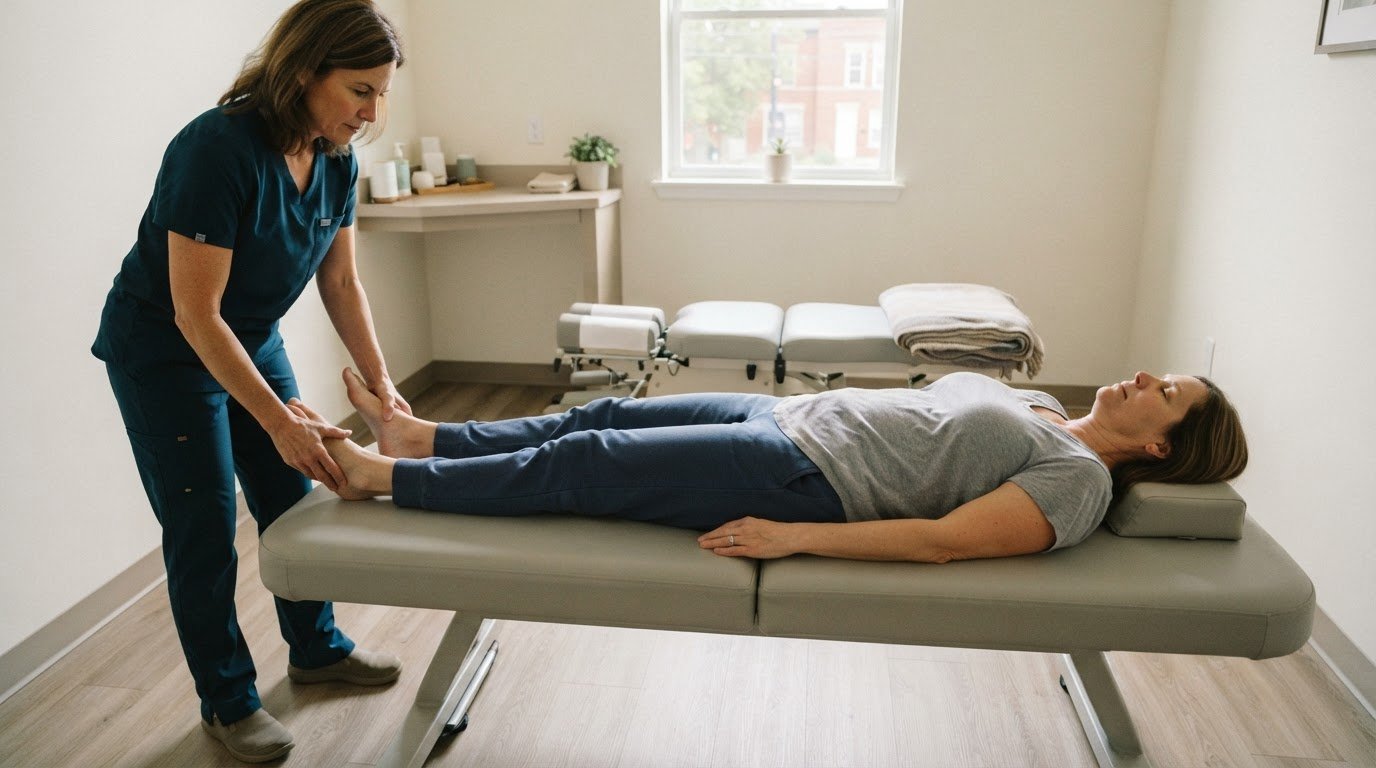
During a clinical exam, one leg may appear 0.5 to 1 inch shorter than the other. This is an apparent difference, not necessarily a difference in bone length. Pelvic position, muscle tension, and how a person stands can influence what the examiner sees. A single observation should be considered with movement, posture, and other findings.
Long hours at a desk can encourage a forward head position and rounded shoulders. Adjusting screen height, keeping both feet supported, and changing positions during the day can reduce sustained strain. Gentle movement, such as comfortable neck turns and shoulder rolls, may help maintain mobility. Stop any exercise that increases pain or brings on new symptoms.
Poor posture can place uneven pressure on spinal structures and add tension over time, but posture alone doesn’t establish spinal degeneration. The nervous system helps coordinate balance and movement, and discomfort can affect how a person holds or moves their body. Targeted exercises may support healthier movement patterns, while gentle upper cervical chiropractic care can assess alignment and posture together. Restoring function means considering the overall pattern, not just a tilted shoulder or a leg-length observation.
If posture changes or recurring tension affect your daily movement, schedule a consultation to discuss whether an upper cervical assessment may be appropriate.

Precision Spinal Care: Gentle, Non-Invasive Spinal Alignment
Precision Spinal Care offers NUCCA Upper Cervical Chiropractic Care for people exploring whether upper-neck alignment may relate to posture, tension, or recurring discomfort. This gentle, non-invasive approach focuses on precise spinal alignment without twisting, popping, or cracking.
An assessment considers your history, symptoms, and movement to help determine whether upper cervical care may be appropriate. The goal is to support spinal function and nervous system balance, not to assume atlas position explains every health concern. Nutritional consultations and wellness coaching are also available for those seeking broader wellness support alongside spinal care.
For people in Chelsea, Dexter, Grass Lake, Ann Arbor, Gregory, Pinckney, Manchester, Munith, and Bridgewater, Precision Spinal Care offers local NUCCA care when posture changes or neck tension keep returning. Contact the clinic to learn more and discuss your options.
Take a Thoughtful Next Step
Understanding how atlas misalignment affects health means considering your symptoms, movement, and overall needs without jumping to conclusions. A useful next step is a conversation about your goals and the care options that may fit them. Precision Spinal Care offers NUCCA Upper Cervical Chiropractic Care, as well as Nutritional Consultations and Parasite Cleansing Programs as separate wellness services.
If you’re considering gentle upper cervical care, ask how an assessment may relate to your posture and daily function. A suitable plan should take your concerns seriously and support informed choices without promising a particular result. You deserve a calm, personal conversation about your wellness priorities.
Contact Precision Spinal Care to discuss your next step, and move forward with clarity and confidence.
Frequently Asked Questions
What is the Atlas Bone?
The atlas is the common name for the first neck bone, or C1. Its joints allow small, coordinated movements that help your head turn and nod. For example, looking over your shoulder uses movement across the upper neck, not just one joint. The atlas works with nearby bones, muscles, and ligaments to support controlled head movement.
What is the Atlas Vertebra?
The atlas vertebra is C1, the first of the seven cervical vertebrae. Unlike the vertebrae below it, C1 has a ring-like shape rather than a typical solid body. Its upper joints meet the skull, while its lower joints connect with C2. Together, these structures help guide head movement and protect the upper spinal cord.
Can atlas dysfunction affect athletic performance?
Upper-neck discomfort or restricted head movement may be relevant when they interfere with a sport-specific task, such as tracking a ball or turning during a swim. That connection alone doesn’t show the atlas is reducing performance. Sleep, training load, injury, vision, and other factors may also matter. An assessment can consider movement and symptoms in context.
Can atlas-related problems improve without treatment?
Some discomfort or movement changes may ease as the underlying strain settles or daily demands change. The course depends on the cause, how symptoms affect function, and whether they persist or worsen. Gentle movement and reducing positions that repeatedly aggravate discomfort may support comfort. Ongoing or concerning symptoms deserve an individual assessment rather than an assumption that the atlas is responsible.
Can children and adults both experience atlas-related issues?
Children and adults can both have upper-neck concerns, though causes and care considerations differ by age and health history. Pediatric chiropractic care should be individualized and gentle. NUCCA care does not replace medical treatment for Bell’s palsy, trigeminal neuralgia, tinnitus, or post-concussion/TBI. Families in Chelsea, Dexter, Grass Lake, Ann Arbor, Gregory, Pinckney, Manchester, Munith, and Bridgewater can explore local wellness support.
Disclaimer
This article is for educational purposes only and is not intended to diagnose, treat, cure, or prevent any disease or medical condition. Upper cervical chiropractic care, including NUCCA-based care, focuses on the relationship between the upper spine, nervous system, posture, and overall body function. Individual results may vary, and not every condition or symptom is appropriate for chiropractic care alone. Always consult with a qualified healthcare provider regarding any health concerns, new or worsening symptoms, or before starting any new treatment plan. If you are experiencing a medical emergency, severe pain, sudden neurological symptoms, or other urgent health concerns, seek immediate medical attention.