

Rest that doesn’t restore you can make ordinary days feel difficult. If you’re looking for help for chronic fatigue syndrome in Michigan, discuss symptom-focused medical care with a clinician and consider supportive strategies such as pacing and lifestyle adjustments. The right plan depends on your symptoms and how they affect daily life.
It’s understandable to want clear answers when fatigue comes with brain fog, memory problems, poor sleep, or pain. This article covers common ME/CFS symptoms, including post-exertional malaise, and explains how medical care and non-drug support may fit into a care plan.
You’ll also learn how pacing can help manage activity and recovery, what to consider when planning care, and how gentle, whole-body wellness support from Precision Spinal Care may complement your medical care. The aim is practical information to help you decide on a next step.
Symptoms including brain fog, muscle pain, sleep disturbances, and post-exertional malaise
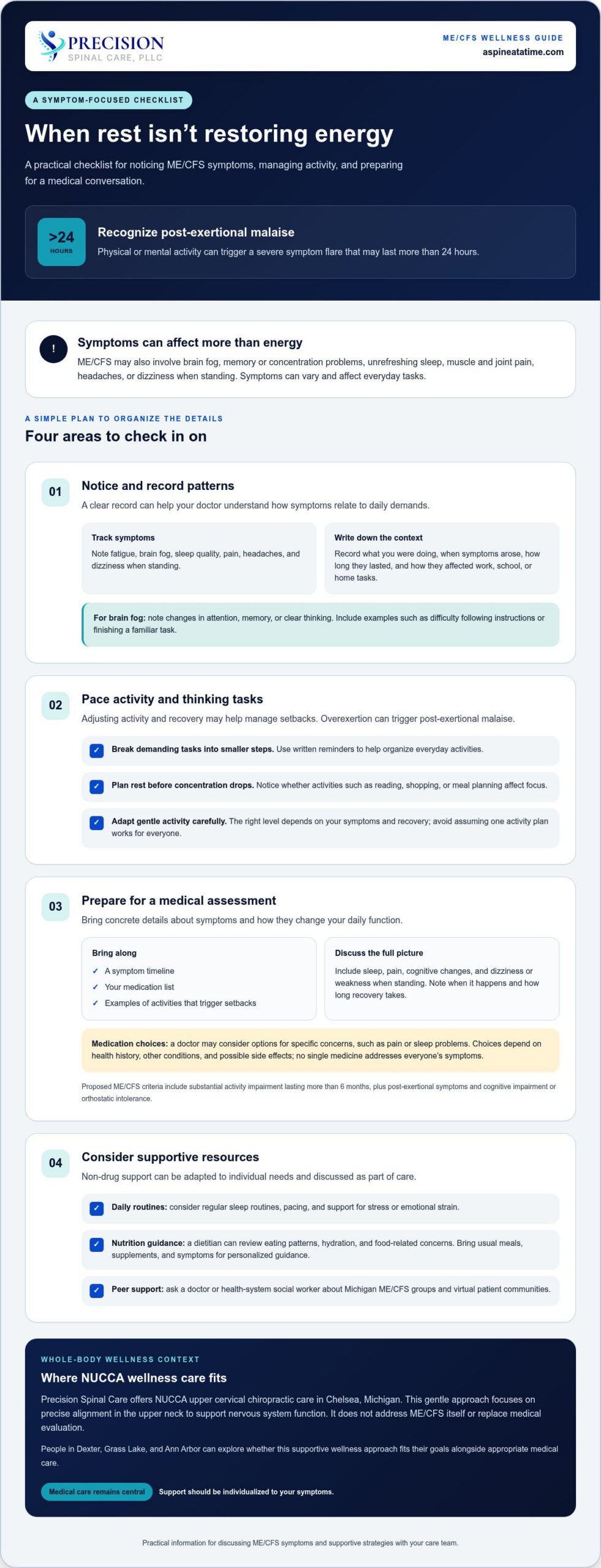
Myalgic encephalomyelitis, also called ME/CFS, can affect daily function well beyond feeling tired. Rest may not restore energy, and physical or mental activity can trigger post-exertional malaise, a severe symptom flare that may last more than 24 hours. Brain fog can make concentrating, remembering details, or finishing familiar tasks harder. Sleep may feel unrefreshing, even after a full night.
Symptoms can include muscle and joint pain, headaches, dizziness when standing, sore throat, or swollen lymph nodes. Some people also describe flu-like symptoms. Fibromyalgia can involve widespread pain, fatigue, sleep problems, and cognitive difficulties, and may occur alongside other conditions. Keep a record of symptoms and how they affect work, school, and home responsibilities to give your doctor a clearer picture.
For a chronic fatigue disability claim, useful evidence may include records of post-exertional malaise, exhaustion that sleep doesn’t relieve, co-occurring conditions, and everyday function. Proposed ME/CFS criteria include substantial activity impairment lasting more than 6 months, plus post-exertional symptoms and cognitive impairment or orthostatic intolerance. Symptom-focused support may include pacing, lifestyle changes, and care directed at specific symptoms.
The University of Michigan Chronic Pain and Fatigue Research Center is a named center for chronic pain and fatigue; its name alone doesn’t establish a dedicated ME/CFS program. When contacting clinics, describe your main symptoms and ask about their experience with post-exertional malaise.
For an appointment, bring a symptom timeline, medication list, and examples of activities that trigger setbacks. Insurance coverage for ME/CFS evaluations and services depends on your plan’s benefits; review the relevant coverage details with your insurer. Social Security Administration guidance allows a couple applying for SSI up to $3,000 in countable assets, excluding a primary residence and one car.
Pharmacological and non-pharmacological therapies
ME/CFS care focuses on individual symptoms because the condition can affect energy, sleep, pain, and concentration. A medical assessment can help identify which symptoms interfere most with daily life. A doctor may consider medication for a particular concern, such as pain or sleep problems. Choices depend on your health history, other conditions, and potential side effects. No single medicine addresses everyone’s symptoms.
Non-drug strategies may include pacing, regular sleep routines, and support for stress or emotional strain. Counseling alongside a carefully adapted, gentle activity program may help with overall symptom relief. Exercise needs to be adjusted with care because overexertion can trigger post-exertional malaise. If standing brings dizziness or weakness, note when it happens and how long recovery takes, then share that information during a medical assessment.
If you have Michigan Medicaid, ask about relevant benefit categories, including medical visits, prescription coverage, and nutrition services. Coverage depends on your specific plan and the service.
For peer support, ask a doctor or health-system social worker about Michigan ME/CFS groups and virtual patient communities. A symptom-focused group can offer a place to share pacing strategies and discuss everyday challenges.
A dietitian can review eating patterns, hydration, and food-related concerns through medical nutrition therapy. Bring a list of usual meals, supplements, and symptoms to the appointment so the dietitian has concrete details for personalized guidance. Avoid assuming that one diet will significantly improve ME/CFS for everyone.
The page states that therapy combining psychological counseling with a gentle exercise program has been found to be the most effective approach for overall symptom relief in chronic fatigue syndrome.
Joel Young’s study on lisdexamfetamine for executive-functioning deficits and chronic fatigue syndrome appeared in Psychiatry Research in October 2012. Participants were randomly assigned to Two groups, with half assigned to the active agent and half to placebo.
Brain fog and memory problems
ME/CFS-related brain fog can affect attention, memory, and clear thinking. You might lose track of a conversation, forget why you entered a room, or struggle to follow written instructions. These difficulties can fluctuate, especially when exhaustion or poor sleep adds to the illness burden. Familiar activities may take longer and become harder to manage.
Look for patterns by recording when problems arise, what you were doing, and how long they last. Note, for example, whether grocery shopping, reading, or planning a meal worsens concentration. Track sleep quality, pain, and muscle symptoms in the same log. These details can help your doctor relate cognitive changes to daily demands.
A medical assessment should consider the full range of symptoms, not memory complaints alone. Tell your doctor when the changes began and how they affect work, school, or household tasks. Bring specific examples, such as missed appointments or difficulty completing a familiar task. Mention new or sudden cognitive changes promptly, as they may need separate medical assessment.
There is no single approach that resolves brain fog for everyone. Symptom-focused support may address contributing problems, while pacing can help limit activity-related setbacks. Break demanding tasks into smaller steps, use written reminders, and plan rest before concentration drops. These practical tools don’t replace medical care, but can make everyday activities easier to organize.
If you’re looking for help for chronic fatigue syndrome in Michigan, start by documenting the memory and focus problems that affect your routine. A clear record gives your doctor concrete examples to discuss and can help shape next steps around your needs.
Possible neurological symptoms associated with ME/CFS include brain fog, difficulty concentrating, memory issues, headaches, and sensitivity to light and sound. Describe the full range of symptoms to your clinician, including any headaches or sensory sensitivity that occur alongside cognitive concerns.
Precision Spinal Care: NUCCA Upper Cervical Chiropractic Care
Precision Spinal Care offers NUCCA Upper Cervical Chiropractic Care in Chelsea, Michigan, for people seeking supportive wellness care alongside appropriate medical care. The upper cervical spine is near important pathways between the brain and body, and NUCCA focuses on precise alignment in this area to support nervous system function. This approach does not address ME/CFS itself or replace medical evaluation.
People in nearby Dexter, Grass Lake, and Ann Arbor can explore whether this gentle, non-invasive approach fits their wellness goals. Nutritional Consultations and Wellness Coaching are also available for broader lifestyle guidance.
Contact Precision Spinal Care to learn more about NUCCA care and personalized wellness support.
Choose a next step that fits your needs
Ongoing fatigue and cognitive symptoms can make planning difficult. Identify the support you want, then discuss it alongside your medical care. If you’re looking for help for chronic fatigue syndrome in Michigan, consider whether wellness guidance could complement your existing care plan.
Precision Spinal Care offers NUCCA Upper Cervical Chiropractic Care, Nutritional Consultations, and Parasite Cleansing Programs. These are wellness services, not medical diagnosis or treatment for ME/CFS. Discuss your wellness goals to decide whether these services are relevant to your needs.
Contact Precision Spinal Care to discuss your wellness goals. Each step toward informed, personalized support can help you move forward with greater clarity.
Frequently Asked Questions
What treatments and symptom-management options are recommended for ME/CFS?
ME/CFS care is generally tailored to the symptoms affecting you most. A clinician may review medication options for specific concerns, such as pain or disrupted sleep, while considering side effects and other health conditions. Keep a brief record of symptom changes after starting or adjusting medication and share it at follow-up. Don’t push through worsening symptoms; activity plans should respond to how your body feels.
What clinics and specialists in Michigan treat ME/CFS?
The University of Michigan Chronic Pain and Fatigue Research Center is a named center for chronic pain and fatigue, but its name alone doesn’t establish a dedicated ME/CFS program. When contacting clinics, describe your symptoms and ask about experience with post-exertional malaise.
Disclaimer
This article is for educational purposes only and is not intended to diagnose, treat, cure, or prevent any disease or medical condition. Upper cervical chiropractic care, including NUCCA-based care, focuses on the relationship between the upper spine, nervous system, posture, and overall body function. Individual results may vary, and not every condition or symptom is appropriate for chiropractic care alone. Always consult with a qualified healthcare provider regarding any health concerns, new or worsening symptoms, or before starting any new treatment plan. If you are experiencing a medical emergency, severe pain, sudden neurological symptoms, or other urgent health concerns, seek immediate medical attention.