

A parasite detox isn’t a proven way to remove an infection. If you’re wondering what a parasite detox is, it’s a diet, product, or supplement promoted to eliminate intestinal parasites. However, cleanses haven’t been shown to reliably clear an infection.
It’s understandable to look for a natural option when digestive symptoms or fatigue disrupt daily life. But symptoms during a cleanse don’t confirm an infection, and feeling better afterward doesn’t prove parasites were removed.
This article explains what natural cleanses can and can’t do, which symptoms may warrant medical evaluation, and how testing and care are approached. You’ll also learn why a suspected infection calls for a clearer plan than a one-size-fits-all cleanse, and how to consider gut and wellness support safely.
So, can those natural parasite cleanses ever work?
Wondering what a parasite detox is? It’s usually a product, supplement, or diet promoted to remove parasites. Natural cleanses aren’t proven to clear a diagnosed infection, and their ingredients or restrictive plans may carry risks.
Evidence for cleanse ingredients
Evidence that cleanse ingredients remove parasites is limited. The National Center for Complementary and Integrative Health reports that human research on detox and cleansing programs is limited and often low quality. A parasite detox isn’t medically proven to remove parasites. Feeling better afterward may reflect dietary changes, constipation relief, or placebo effects, rather than parasite removal.
Cleanse risks and medication interactions
Cleanse-related diarrhea can cause dehydration and electrolyte imbalances. Some herbal supplements may interact with prescription medicines, including blood thinners. Laxative-like products can also cause excessive diarrhea and increase the risk of kidney injury. If you take regular medication or manage a chronic condition, discuss supplement use with a healthcare provider before starting.
Common ingredients and dietary restrictions
Parasite cleanse products may contain wormwood, black walnut hull, clove, oregano oil, garlic, detox teas, or colon cleansers. Some plans restrict sugar or other foods; following restrictive diets long term can create nutritional gaps. These products aren’t a standardized way to identify or clear infections. Their ingredients and effects vary, so symptoms during a cleanse can’t confirm a parasite or its removal.
Cleanses versus clinician-directed care
A cleanse isn’t a standardized medical protocol for identifying or clearing every parasite. Understanding what a parasite detox is helps distinguish a wellness product from care for a diagnosed infection. Testing can identify whether parasites are present, and clinicians can then select appropriate antimicrobial or antiparasitic medication. Some cleanse plans last one to four weeks, but that duration doesn’t establish effectiveness or confirm an infection.
Symptoms of parasitic infections
Digestive symptoms can have many causes, including contaminated food, bacteria, and parasitic infections. Symptoms alone can’t confirm the cause or show that a supplement is appropriate.
Common intestinal symptoms
Intestinal parasites can cause diarrhea, gas, bloating, abdominal pain, nausea, and vomiting. Anal itching is another possible symptom, especially at night with pinworms. Some people with an infection have no symptoms but can still pass it to others. Because these signs overlap with other digestive problems, they don’t establish a parasite infection or determine appropriate care on their own.
Symptoms attributed to parasites online
Social media often links fatigue, brain fog, or bloating to parasites. These symptoms can have other causes, so they don’t confirm an infection. Even unusual material in stool may be food fibers or mucus rather than a worm. Laboratory identification may be needed to tell the difference. Don’t use symptoms during a cleanse as proof of infection or successful parasite removal.
Symptoms warranting medical attention
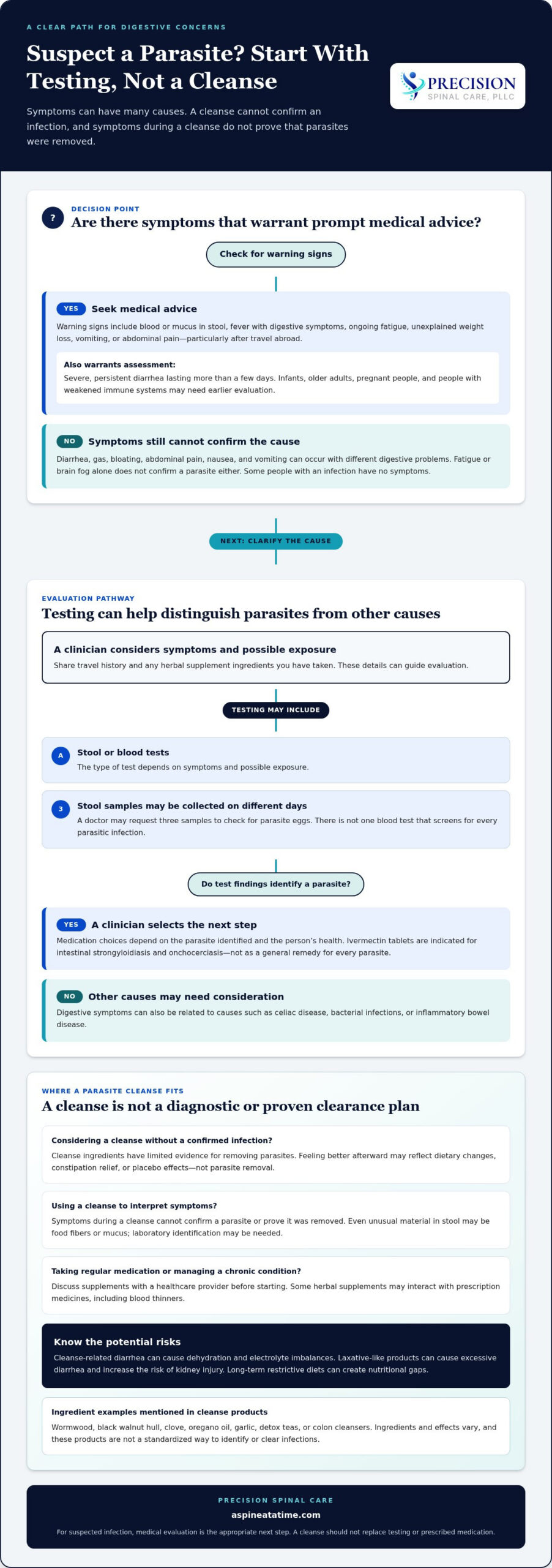
Seek medical advice for blood or mucus in stool, fever with digestive symptoms, ongoing fatigue, unexplained weight loss, vomiting, or abdominal pain, particularly after travel abroad. Severe, persistent diarrhea lasting more than a few days also warrants assessment. Infants, older adults, pregnant people, and people with weakened immune systems may need earlier evaluation. Persistent digestive symptoms can have other causes, including celiac disease, bacterial infections, or inflammatory bowel disease.
Pinworms are relatively common in the United States and typically cause mild symptoms. Nighttime itching around the anus is a classic sign, but diarrhea or abdominal pain doesn’t necessarily mean someone has intestinal parasites.
Possible signs include fatigue, bloating, diarrhea after traveling, stomach pain, nausea or vomiting, unexplained weight loss, or passing worms in stool. Recent travel to an area where parasites are endemic, along with unexplained weight loss, could point to a parasite, but these signs don’t prove infection. For severe, persistent diarrhea lasting more than a few days, contact a primary care provider.
Frequently asked questions about parasite testing and care
Testing helps distinguish parasitic disease from other causes of digestive symptoms, such as bloating after eating contaminated food.
How are intestinal parasites tested?
A doctor may use stool or blood tests, based on symptoms and possible exposure. According to the Centers for Disease Control and Prevention, a doctor may request three stool samples collected on different days to check for parasite eggs. There isn’t one blood test that screens for every parasitic infection. Share travel history and any herbal supplement ingredients you’ve taken, since those details can guide evaluation.
What medications are used, including ivermectin?
Prescription medication depends on the parasite identified and the person’s health. Ivermectin tablets are indicated for intestinal strongyloidiasis and onchocerciasis, not as a general remedy for every parasite. A doctor selects medication based on the suspected disease and test findings. Don’t substitute a cleanse or herbal product for prescribed medication, since ingredients and effects differ.
How are pinworms managed at home?
Pinworm infections may be managed with targeted medication, sometimes given in a few doses. Handwashing after using the bathroom and before eating helps prevent spread. Changing underwear and bed linens daily can also help clear a household outbreak. Pinworms spread when contaminated surfaces or hands carry eggs to someone’s mouth, so consistent hygiene matters. For symptoms or suspected infection, seek medical advice about testing and appropriate care.
Precision Spinal Care: NUCCA Upper Cervical Chiropractic
Based in Chelsea, Michigan, Precision Spinal Care offers NUCCA upper cervical chiropractic care and wellness support for people in nearby communities. Gentle spinal alignment focuses on the upper neck and nervous system, without twisting, popping, or cracking.
For parasite testing or a suspected infection, medical evaluation is the appropriate next step. Precision Spinal Care offers nutritional consultations, wellness coaching, and parasite cleansing programs as part of personalized wellness support, but these services don’t diagnose or provide medical care for parasitic infections. A cleanse should not replace testing or prescribed medication.
If you’re exploring whole-body wellness alongside appropriate medical care, contact Precision Spinal Care to learn more about its approach.
Choose a Clear, Supportive Next Step
When health concerns linger, a thoughtful plan can help you move forward with more confidence. Track symptoms, changes in digestion, and questions that arise, then share those details at a healthcare visit. That conversation can help guide decisions about testing and next steps.
Knowing what a parasite detox can and can’t do makes it easier to distinguish wellness support from medical evaluation. Choose information that respects both: your concerns deserve attention, and suspected infections call for a careful, evidence-informed approach. Wellness choices work best when they complement appropriate medical care rather than replace it.
For a conversation about holistic wellness support, contact Precision Spinal Care. A steady, informed next step can make the path ahead feel more manageable.
Frequently Asked Questions
What are parasites?
Parasites are organisms that live in or on another organism, called a host. Intestinal parasites include protozoans, which are single-celled organisms, and worms such as pinworms. Some infections cause symptoms, while others may not. The type of parasite matters because exposure, testing, and appropriate medical care differ.
Can apple cider vinegar help with parasites?
Apple cider vinegar hasn’t been shown to remove intestinal parasites. Drinking it or adding it to meals shouldn’t replace testing or prescribed medication for a diagnosed infection. It can still be used as a food ingredient if it suits your diet, but digestive changes after using it don’t confirm that parasites were present or removed.
How do I deworm myself naturally?
There’s no proven natural method for deworming yourself. Avoid taking herbal products or over-the-counter medicines based only on a symptom or social media post. Instead, note when your concerns began and record relevant exposures, such as travel, untreated water, undercooked meat, or contact with animals. Those details can help guide a focused medical evaluation.
Parasite Cleanses: Hype or Helpful?
Reliable evidence doesn’t support cleanses as a way to remove parasites. They may change eating habits or bowel movements, but those effects don’t establish parasite removal. For everyday digestive support, fiber-rich foods such as vegetables, fruit, legumes, and whole grains can nourish beneficial gut bacteria without claiming to clear an infection.
What if I don’t have symptoms, but I still think I might have a parasite?
Having no symptoms doesn’t completely rule out infection, since some people can carry parasites without feeling ill. Consider what prompted your concern: recent travel, untreated water, or a known exposure provides more context than a general fear. Write down the exposure and any changes in your health so a medical evaluation can focus on relevant risks.
Disclaimer
This article is for educational purposes only and is not intended to diagnose, treat, cure, or prevent any disease or medical condition. Upper cervical chiropractic care, including NUCCA-based care, focuses on the relationship between the upper spine, nervous system, posture, and overall body function. Individual results may vary, and not every condition or symptom is appropriate for chiropractic care alone. Always consult with a qualified healthcare provider regarding any health concerns, new or worsening symptoms, or before starting any new treatment plan. If you are experiencing a medical emergency, severe pain, sudden neurological symptoms, or other urgent health concerns, seek immediate medical attention.