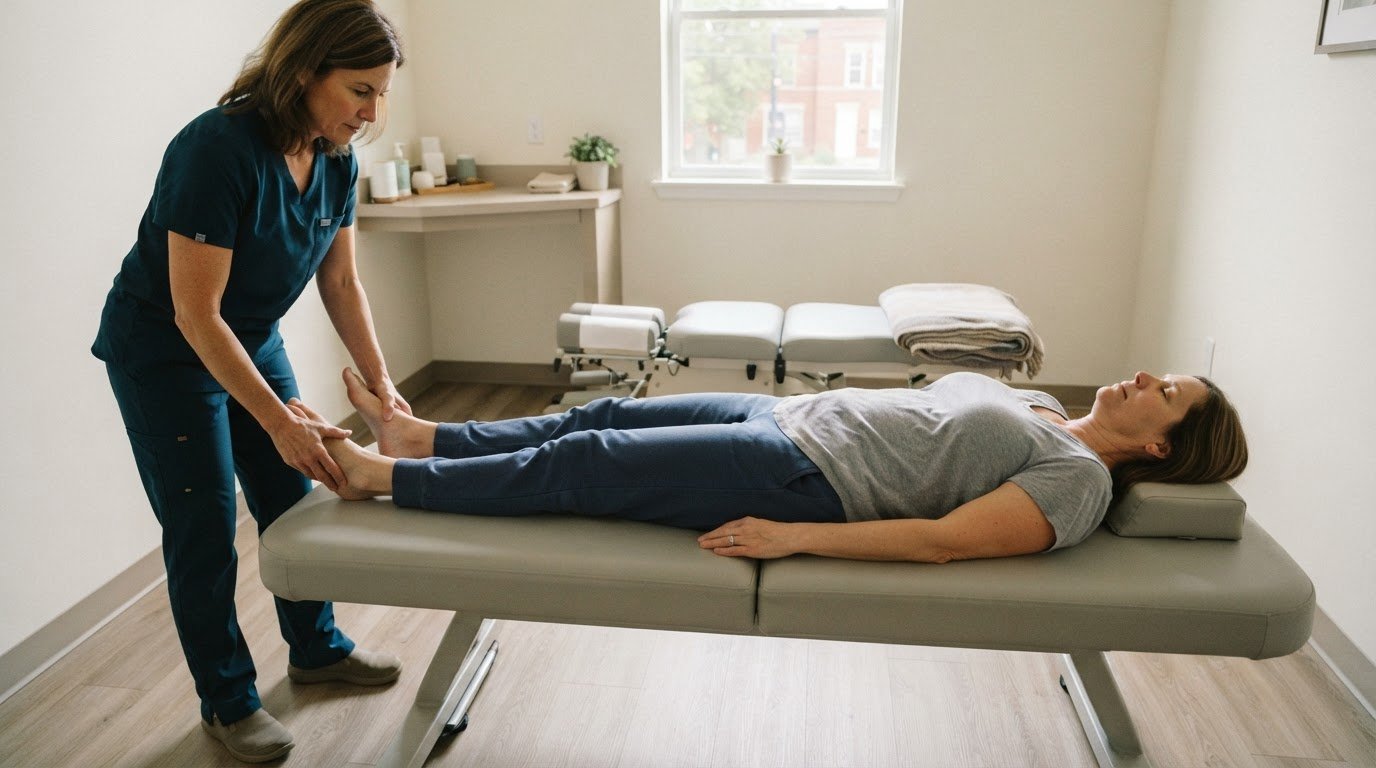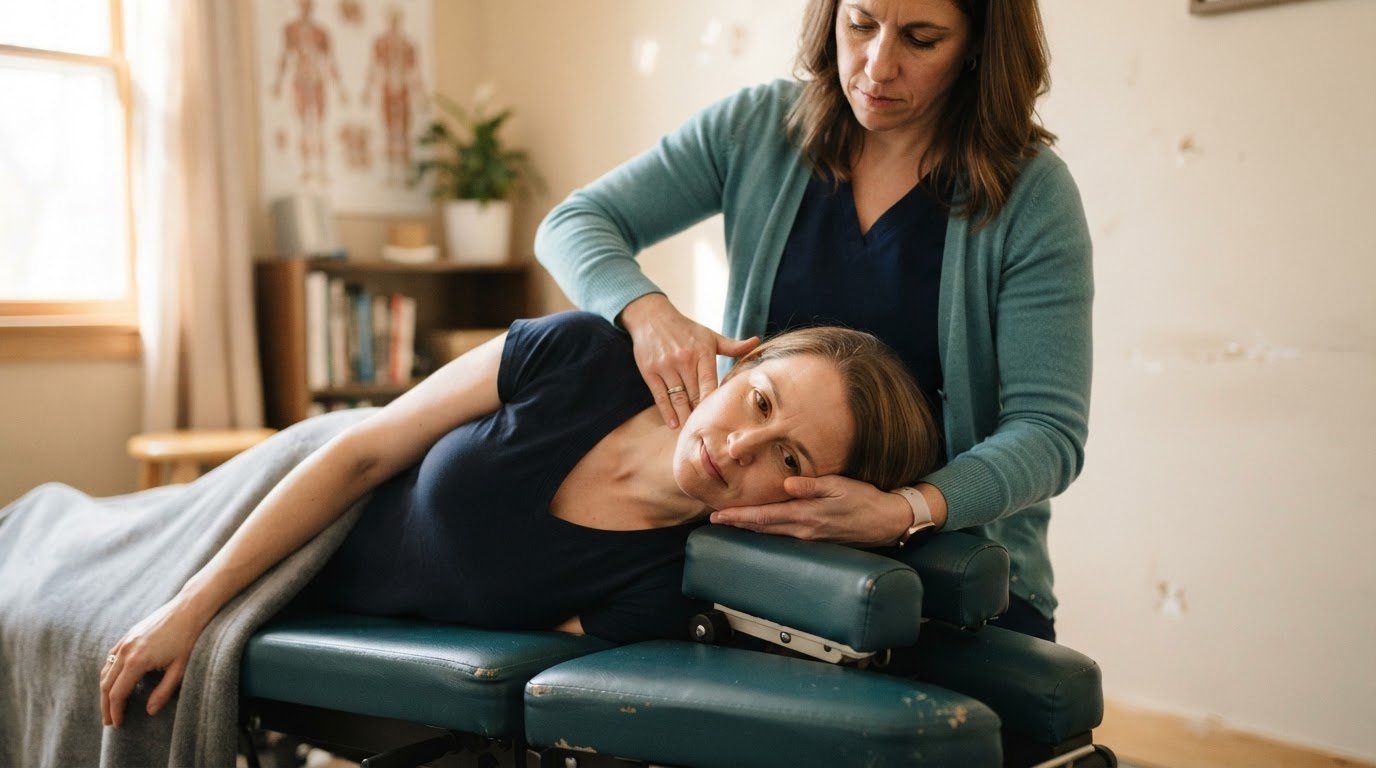

There are 29 chiropractic specialists in Chelsea, Michigan, so a posture correction specialist serving Chelsea, MI may be found by searching from your location and narrowing results to your preferred travel distance. Compare each specialist’s approach with your needs, including whether you want gentle upper cervical care and guidance for posture-related concerns. The right fit depends on your goals and the type of care you’re seeking.
It’s understandable to want more than a quick answer to why your posture feels off. This article explains what to consider when finding chiropractors near Chelsea, what home exercises and patient education may involve, and how a personalized plan can support your recovery goals. You’ll also learn how gentle care focused on the upper cervical spine may fit into a broader approach to posture and wellness.
Chiropractors serving Chelsea, Michigan
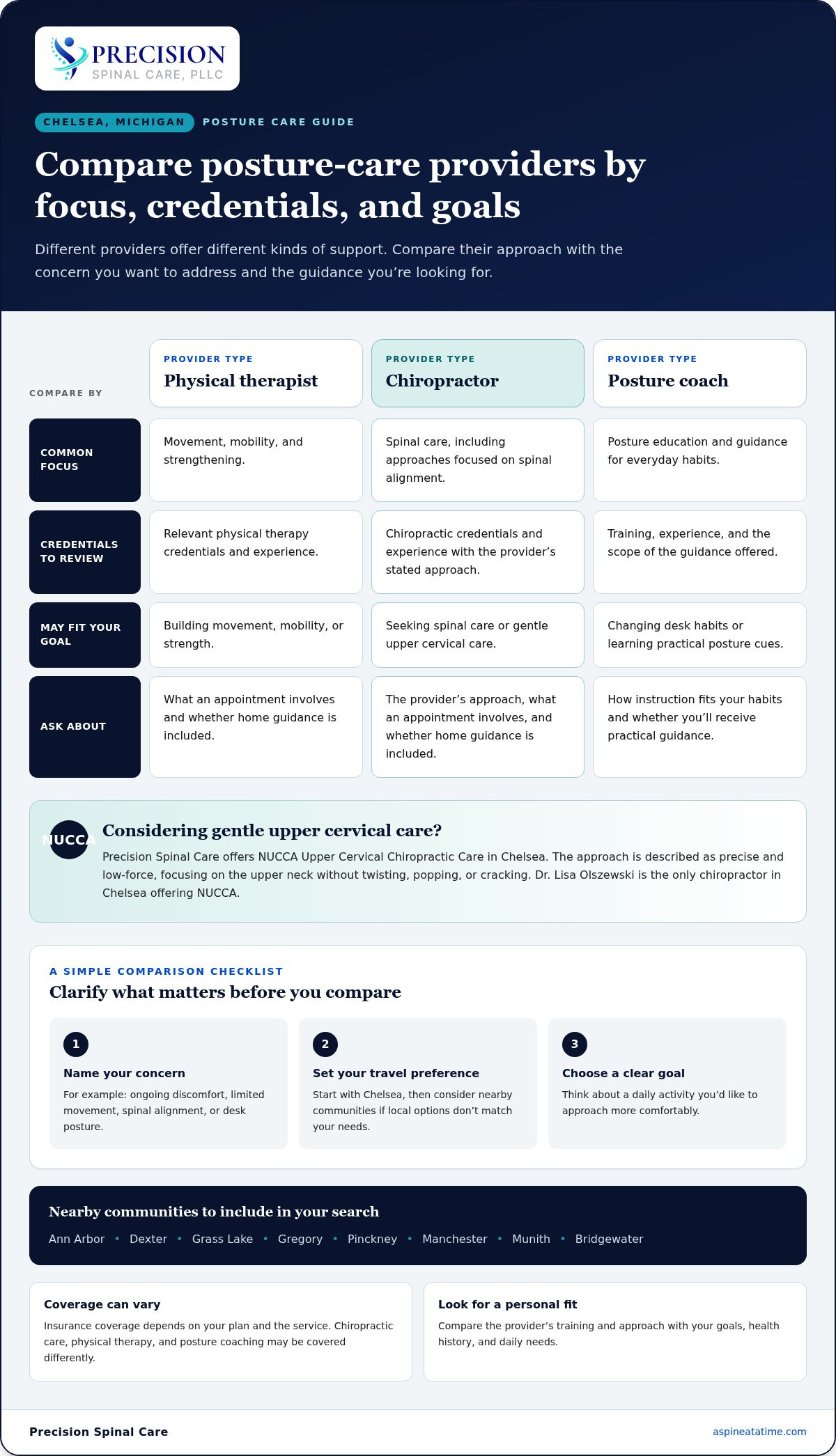
To find posture care near Chelsea, start with your location, then narrow results by the distance you’re willing to travel. If local options don’t match your needs, include nearby communities such as Ann Arbor, Dexter, Grass Lake, Gregory, Pinckney, Manchester, Munith, and Bridgewater.
Comparing Posture Care Providers
Different providers focus on different needs. Physical therapists commonly work on movement, mobility, and strengthening; chiropractors provide spinal care; posture coaches may offer education and habit guidance. Consider your main concern, such as ongoing discomfort, limited movement, spinal alignment, or desk posture. Ask what an appointment involves and whether home guidance is part of the plan.
Insurance coverage for posture care depends on your plan and the type of service. Chiropractic care, physical therapy, and posture coaching may be covered differently, so review your benefits for the specific service you’re considering.
Specialist Qualifications in Michigan
Look for training and experience that match the care offered. For chiropractic services, review the provider’s chiropractic credentials and experience with their stated approach. A physical therapist should have relevant physical therapy credentials, while a posture coach should be able to explain their training and the scope of their guidance. These details help you understand how the provider can support your goals.
Compare the provider’s approach with your needs, not just the distance. If you’re seeking gentle upper cervical care, for example, look for experience with that method. If your main goal is changing desk habits, clear instruction and practical guidance may matter more. Before scheduling, identify your concern, preferred travel distance, and goal. That makes local options easier to compare.
Home exercises and patient education
Posture guidance is most useful when it connects with everyday routines. A provider may discuss how your habits relate to your goals and suggest practical ways to build awareness at home. For example, someone who works at a desk can notice when their head drifts forward and adjust their sitting position.
Useful education should fit your habits and goals. Ask for a clear explanation of the posture cue to remember and how to apply it. A desk worker might focus on keeping the screen in view without leaning forward; someone who carries a shoulder bag might pay attention to how they distribute its weight.
- Practice the cue: Connect one posture reminder to a routine, such as sitting down to work.
- Use the demonstration: Repeat the movement as shown, rather than guessing at its form.
- Share feedback: Note which daily task feels difficult and discuss it at the next appointment.
Notice patterns between appointments. For example, consider whether discomfort appears during a long drive, computer work, or repeated lifting. These observations give your provider practical context and help distinguish a posture habit from a task that may call for a different approach.
Keep guidance easy to revisit. A short written cue, such as “sit back before leaning toward the screen,” may be easier to remember than several corrections at once. Bring questions about the movement or routine that feels hardest to change to your next appointment. Clear, practical guidance can help connect posture awareness to daily life.
Personalized treatment plans and recovery goals
A useful plan takes your daily habits, symptoms, health history, and goals into account. Note whether headaches or neck tension appear after screen work, driving, or lifting. These details can help shape posture support around the activities you want to manage more comfortably.
Posture-focused care may support people with muscle tension, neck or shoulder discomfort, headaches, or movement concerns, but it cannot determine the medical cause of symptoms. Seek medical evaluation for new, severe, worsening, or concerning symptoms, especially after an injury.
There’s no single timeline or visit schedule for posture support. The plan depends on your goals, symptoms, daily demands, and how your function changes over time. Someone adjusting desk habits may have different priorities from someone working toward comfortable movement after an injury.
Consider the limits of posture guidance, too. It may help address movement habits, but it does not replace medical assessment when symptoms need evaluation. The approach and its suitability depend on your health history and the concern being addressed. Share relevant changes in your health and daily activities during follow-up conversations.
- Define a functional goal: Describe a specific task, such as sitting through a work meeting with less neck tension.
- Track patterns: Record which activities bring on discomfort and what changes ease it.
- Review progress: Discuss whether daily movement or symptom patterns have changed, then adjust the plan accordingly.
A personalized plan should connect each step to a meaningful goal, not just a posture label. A consultation can be an opportunity to discuss your symptoms, priorities, and suitable support.
Treatments may include spinal adjustment, electrical therapy, and mobilization therapy. Centers for Medicare & Medicaid Services says Medicare excludes chiropractor-provided services other than manual spinal manipulation to treat spinal subluxation.
Precision Spinal Care: NUCCA Upper Cervical Care
Precision Spinal Care offers NUCCA Upper Cervical Chiropractic Care for people seeking gentle support with posture and spinal alignment. Dr. Lisa Olszewski is the only chiropractor in Chelsea offering NUCCA. This precise, low-force approach focuses on the upper neck without twisting, popping, or cracking. Care is personalized around your goals, such as sitting more comfortably or moving through daily activities with greater ease.
NUCCA care may provide supportive chiropractic care for people with Bell’s palsy, trigeminal neuralgia, tinnitus, or post-concussion/TBI concerns. It does not replace medical treatment for these conditions. A consultation gives you a chance to discuss your health history and goals and learn whether this approach fits your needs.
To learn more, contact Precision Spinal Care or visit aspineatatime.com.
Take a Thoughtful Next Step
Posture habits take shape through everyday choices, not a single appointment. When considering a posture correction specialist in Chelsea, MI, think about the movements and activities you’d like to approach more comfortably. A clear goal can guide a useful conversation about care.
Precision Spinal Care offers NUCCA Upper Cervical Chiropractic Care, Nutritional Consultations, and Parasite Cleansing Programs. For posture concerns, a conversation can focus on whether gentle upper cervical care fits your needs and wellness goals. Your priorities deserve thoughtful consideration, without pressure to choose an approach that doesn’t feel right.
Contact Precision Spinal Care to discuss your posture and wellness goals. A thoughtful next step can help you move forward with clarity and confidence.
Frequently Asked Questions
How can I find chiropractors within a specific distance from my location?
Use a map or local directory that lets you set a travel radius from your address or ZIP code. Start in Chelsea, Michigan, then expand your search to nearby Dexter or Grass Lake if needed. Compare clinic locations against your usual routes, such as a commute or school pickup, and review appointment details before deciding where to go.
How can I find a top-rated chiropractor in Chelsea, MI?
Compare recent patient ratings alongside the chiropractor’s approach and the concerns they support. Chiropractic specialists in Chelsea have an overall average rating of 4.6 stars. Read individual reviews for details that matter to you, such as communication, care style, or help with posture concerns. A high rating alone won’t show whether a provider’s approach fits your preferences.
What types of posture correction specialists serve Chelsea, MI?
Chiropractors, physical therapists, and posture coaches can each offer different kinds of support. Chiropractors provide chiropractic care; physical therapists focus on movement and physical function; posture coaches may teach posture habits and ergonomic awareness. When comparing a posture correction specialist in Chelsea, MI, consider whether your priority is spinal care, movement guidance, or changing workplace habits.
Which posture correction clinics or providers are located near Chelsea, MI?
Dr. Lisa Olszewski at Precision Spinal Care offers NUCCA care in Chelsea to patients from Dexter, Grass Lake, Ann Arbor, Gregory, Pinckney, Manchester, Munith, and Bridgewater. She is the only chiropractor in Chelsea offering NUCCA. If gentle upper cervical care is your priority, that distinction can help narrow your local search.
What does a typical posture assessment and care plan involve?
A posture conversation may begin with your daily activities, symptoms, and goals, such as standing comfortably at work or sitting through a commute. The provider may observe how you stand or move, explain relevant findings, and discuss next steps. Depending on the approach, guidance may include posture education or movements to practice at home.
Disclaimer
This article is for educational purposes only and is not intended to diagnose, treat, cure, or prevent any disease or medical condition. Upper cervical chiropractic care, including NUCCA-based care, focuses on the relationship between the upper spine, nervous system, posture, and overall body function. Individual results may vary, and not every condition or symptom is appropriate for chiropractic care alone. Always consult with a qualified healthcare provider regarding any health concerns, new or worsening symptoms, or before starting any new treatment plan. If you are experiencing a medical emergency, severe pain, sudden neurological symptoms, or other urgent health concerns, seek immediate medical attention.